How to Write a Telehealth Press Release: Tips & Examples
7 min read
Key Takeaways
A telehealth press release earns more attention when it combines a meaningful healthcare development with verified evidence, clear patient impact, and information that matters to a broader audience.
Every effective telehealth press release follows a structured format that includes a strong headline, a concise lead, supporting details, credible quotes, company information, and clear media contact details.
Verified clinical data, authoritative medical voices, and careful HIPAA compliance help establish trust with healthcare journalists while reducing the risk of privacy or credibility concerns.
Patient-focused messaging, plain language, supporting statistics, and visible attention to security and compliance make telehealth announcements easier for both journalists and the public to understand and trust.
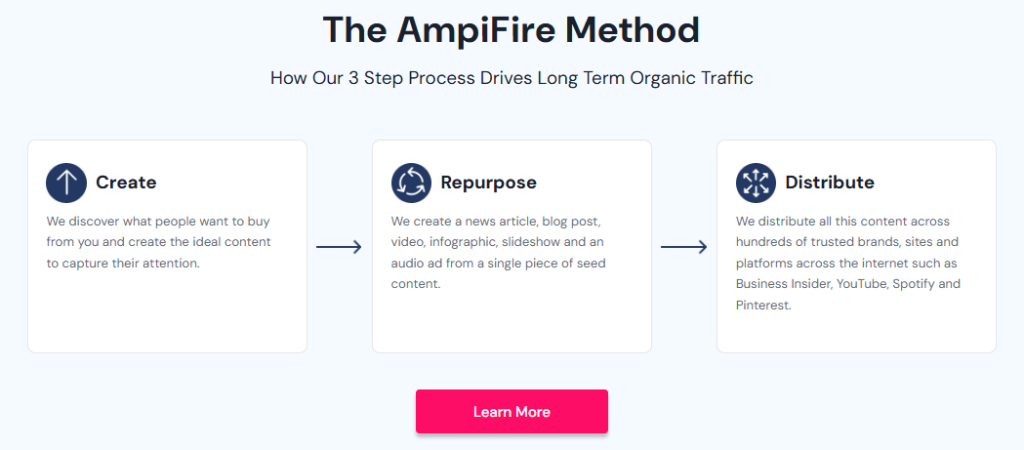
AmpiFire’s AmpCast AI turns one telehealth release into eight content formats and distributes it across 300+ high-authority sites, including Google News, YouTube, Apple Podcasts, Spotify, MSN, and Fox affiliates, reaching audiences across search, social media, video, and audio channels so your announcement reaches patients, journalists, and partners simultaneously.
A Telehealth Press Release Done Right Gets You Coverage
A telehealth press release earns coverage when it combines genuine news value with credible evidence and a clear patient benefit. In a crowded digital health market, announcements supported by data, expert perspectives, and real-world impact are far more likely to attract attention from healthcare and technology journalists.
The most effective telehealth press releases follow a structured format that delivers key facts up front, then supports them with verified data, relevant context, and authoritative quotes. Healthcare is highly regulated, so successful releases also pay close attention to compliance, patient privacy, and accurate claims. Clear language and a focus on patient benefit help establish trust with reporters and readers.
Timing and distribution matter as much as the writing itself. Releases tied to industry trends, healthcare events, or significant patient outcomes draw more interest, especially when they reach audiences across multiple channels.
Platforms like AmpiFire’s AmpCast AI extend that reach by turning a single telehealth announcement into multiple content formats distributed across news, search, social, video, and audio channels, delivering the kind of multi-channel reach that traditional PR distribution simply cannot match.
Stop Limiting Yourself to Just PR or SEO Multi-Channel Content Marketing Gets Real Results
• The Problem: Traditional PR and SEO only reach audiences through single channels. Your customers are scattered across search, social media, video platforms, and podcasts. • The Solution: AmpiFire’s AmpCast transforms one topic into 8 different formats (news articles, blog posts, videos, video shorts, interview podcasts, infographics, slideshows, social posts) and distributes across 300+ high-authority sites including Fox affiliates, Spotify, and YouTube.
What You’ll Discover on PressCable: ✓ Why multi-channel content outperforms traditional PR and SEO ✓ Real case studies of businesses dominating multiple platforms ✓ Step-by-step guides for multi-format content creation ✓ Cost-effective alternative to expensive agencies
Every telehealth press release rests on careful documentation and language that respects both readers and regulators.
Every effective telehealth press release follows a clear structure. Think of it like a news article. The most important information goes first, and supporting details follow:
Headline: Clear, specific, and newsworthy. Lead with the outcome or the announcement, not vague language.
Dateline: City, state, and date of release.
Lead Paragraph: Answers who, what, when, where, why, and how in 2–3 sentences.
Body Paragraphs: Supporting details, data, context, and quotes.
Boilerplate: A short “About” paragraph for your organization.
End notation: Use ### to signal the end of the release.
Each element carries weight on its own, but a few of them deserve closer attention in the telehealth space. The points below cover the details that most often determine whether a release earns coverage or gets flagged for compliance issues.
Verified Clinical or Patient Data
Data is what separates a credible telehealth press release from a marketing flyer. Journalists covering health and technology beats expect numbers, and they fact-check them.
If your data comes from a third-party study, a peer-reviewed journal, or a recognized health organization like the CDC or the American Medical Association, cite it explicitly. This builds credibility with journalists and gives them something to reference in their own reporting.
Quotes From Medical or Executive Spokespeople
A quote in a press release is a voice that humanizes your announcement. For telehealth releases, the most effective quotes come from one of two sources: a licensed clinician who can speak to the medical value of what you’re announcing, or a C-suite executive who can speak to the business and patient impact.
Ideally, include both. Keep quotes concise, specific, and free of corporate jargon, because journalists will cut them if they read like marketing copy.
HIPAA-Compliant Language Considerations
This is where telehealth press releases differ most sharply from other industries. Never include identifiable patient information without explicit written consent that meets HIPAA standards.
Even anonymized patient stories require care, since phrases like “a 45-year-old diabetic patient in Ohio” can sometimes be identifying in smaller communities. When in doubt, describe patient demographics in broad aggregate terms (“patients with Type 2 diabetes in rural communities”) instead of any detail that could identify an individual.
Telehealth Press Release Examples to Learn From
Example 1: New Telehealth Service Launch Announcement
FOR IMMEDIATE RELEASE
ClearPath Health Launches AI-Powered Virtual Mental Health Platform Serving Rural Communities in the Southeast
ATLANTA, GA, March 15, 2024 — ClearPath Health today announced the launch of MindBridge, a HIPAA-compliant telehealth platform powered by AI-assisted triage, designed to connect patients in rural Georgia, Alabama, and Mississippi with licensed mental health professionals within 24 hours of initial contact. The platform addresses a critical gap identified by the Substance Abuse and Mental Health Services Administration (SAMHSA), which reported that over 70% of rural counties in the U.S. have no practicing mental health providers.
MindBridge uses an AI-assisted intake system to match patients with the appropriate clinician based on symptom severity, language preference, and insurance coverage. The platform launches with a network of 180 licensed therapists, psychiatrists, and counselors and accepts Medicaid in all three states.
“Access to timely mental health care has been one of the most persistent challenges in rural medicine,” said Dr. Amelia Hart, Chief Medical Officer at ClearPath Health. “MindBridge gives patients a direct line to qualified clinicians within a single day, which is something the traditional referral system simply has not delivered.”
ClearPath Health expects to expand MindBridge to North Carolina and Tennessee by the fourth quarter of 2024.
About ClearPath Health ClearPath Health is an Atlanta-based digital health company focused on expanding access to behavioral and mental healthcare in underserved communities across the Southeast.
Example 2: Medical Research or Study Findings Release
FOR IMMEDIATE RELEASE
New Study Published in the Journal of Telemedicine and Telecare Finds Virtual Diabetes Management Program Reduces HbA1c Levels by 1.8% in 90 Days
BOSTON, MA, May 10, 2024 — A peer-reviewed study published today in the Journal of Telemedicine and Telecare found that patients enrolled in GlucoTrack’s remote diabetes management program achieved an average reduction in HbA1c levels of 1.8 percentage points over 90 days, a clinically significant outcome based on American Diabetes Association benchmarks. The study followed 847 patients across six outpatient clinics and was conducted in partnership with researchers at Boston University School of Public Health.
Participants received continuous glucose monitoring devices, weekly virtual check-ins with certified diabetes educators, and AI-generated dietary guidance based on real-time glucose patterns. The study compared outcomes against a control group of 412 patients receiving standard in-person diabetes care over the same 90-day period.
“A 1.8 point drop in HbA1c over 90 days is the kind of outcome we typically associate with intensive in-person intervention,” said Dr. Rachel Tan, lead researcher at Boston University School of Public Health. “Seeing it achieved through a virtual program at this scale signals a real shift in what remote care can deliver.”
GlucoTrack plans to make the full study available to healthcare providers and payer partners ahead of its presentation at the American Diabetes Association’s 2024 Scientific Sessions.
About GlucoTrack GlucoTrack is a Boston-based virtual diabetes care company providing remote monitoring and clinical support to patients managing Type 1 and Type 2 diabetes.
Strong telehealth press releases read like formal announcements built for media pickup, with clear facts, credible quotes, and verified data front and center.
Tips for Writing an Effective Telehealth Press Release
Focus on Patient Benefits
Lead every release with the patient-facing impact, and use your business or clinical details to support that story, not replace it.
Ask yourself: if a patient with limited mobility in a rural county read this press release, would they immediately understand why it matters to them? Reframe every feature as a patient outcome, and your release immediately becomes more publishable.
Use Clear, Non-Technical Language
Your press release needs to be readable by a general assignment journalist who may have no clinical or technical background. Write at a level that a 15-year-old could follow without losing the substance that a healthcare editor needs to trust your credibility.
If a term is genuinely necessary, like “asynchronous care,” define it briefly in the same sentence. Don’t assume the reader knows what it means, even if your industry does.
Support Claims with Data
Vague benefit statements are among the most common reasons telehealth press releases are ignored. Every significant claim in your release should have a number behind it.
If your own internal data is limited, lean on publicly available statistics to contextualize your announcement. This frames your release within a larger, verified narrative, which makes it far easier for journalists to write around.
Emphasize Compliance & Security
Healthcare journalists and their editors are acutely aware of data privacy concerns in digital health. Proactively addressing data encryption standards or any relevant regulatory certifications in your release removes a barrier to publication.
Omitting compliance language in a telehealth release is a red flag for experienced healthcare reporters who know to look for it.
Want to Get Your Telehealth Story Heard Everywhere with AmpiFire?
AmpiFire gives your announcements the kind of multi-channel reach that was previously only available to organizations with large PR budgets.
Even the best-written telehealth press release can disappear into the void if it travels through the wrong channels. That’s where content amplification makes the difference between a release that gets one or two pickups and one that appears across hundreds of relevant platforms at once. AmpiFire is built for exactly this kind of multi-channel reach.
AmpiFire’s AmpCast AI turns your telehealth announcement into eight content formats, including news articles, blog posts, infographics, slideshows, podcasts, long-form videos, reels, and social posts. Each format is then published on 300+ trusted sites, including YouTube, Google News, Apple Podcasts, Spotify, MSN, Pinterest, and Fox affiliate sites. This reach puts your telehealth announcement in front of journalists, patients, and potential partners. Get seen everywhere with AmpiFire today.
A telehealth press release should be between 400 and 600 words. For more complex announcements, such as a clinical study with multiple findings, keep the release tight and link to a full research brief for readers who want the technical details. This approach respects a journalist’s time while giving depth-seeking readers a clear path to more information.
Can a small telehealth startup benefit from a press release?
Yes, and a well-executed press release often matters more for a small telehealth startup than for an established enterprise. When you’re building credibility from scratch, a release on recognized news platforms signals legitimacy to patients, investors, and partners who have never heard of you.
How often should a telehealth company send press releases?
Quality always outranks frequency. Send a press release whenever you have something genuinely newsworthy, like a product launch, a funding milestone, a clinical partnership, a significant hire, or a research finding. For most growing telehealth companies, that translates to roughly four to eight releases per year, since sending releases too frequently with thin news value trains journalists to ignore your pitches.
What makes a telehealth press release newsworthy?
A telehealth press release is newsworthy when it combines genuine news value with clear public relevance. The strongest releases affect a significant number of patients, address a recognized gap in healthcare access, present verified clinical data, signal meaningful market movement, such as funding or acquisitions, or connect directly to a current health news cycle.
Do I need to hire a PR firm to distribute a telehealth press release?
No, you don’t need a PR firm. AmpiFire’s AmpCast AI gives telehealth organizations direct access to distribution channels that once required agency relationships. It turns one topic into eight content formats (news articles, blog posts, interview podcasts, longer informational videos, reels/shorts, infographics, flipbooks/slideshows, and social posts) and publishes each across 300+ high-traffic sites, including Google News, YouTube, Spotify, MSN, and Fox affiliate sites.
*Disclaimer: Results may vary based on individual circumstances, business type, and content strategy. The time savings and outcomes mentioned are based on typical user experiences and are not guaranteed. For specific pricing and service details, please visit AmpiFire.
Thula is a seasoned content expert who loves simplifying complex ideas into digestible content. With her experience creating easy-to-understand content across various industries like healthcare, telecommunications, and cybersecurity, she is now honing her skills in the art of crafting compelling PR. In her spare time, Thula can be found indulging in her love for art and coffee.