Muck Rack vs Propel: Pros & Cons, Costs, Alternatives
7 min read
Key Takeaways
Muck Rack combines journalist search, pitching, monitoring, and reporting in one public relations (PR) platform, with custom-quoted plans that typically cost $5,000–$53,000 per year.
Propel focuses on AI-written pitches and press releases, trained on more than 25 million PR pitches, with three plans that differ only in user seats and monitoring alerts.
Neither Muck Rack nor Propel publishes its prices, while top alternatives like AmpiFire list plans starting at $97 per month and Medialyst starts at $149 per month.
G2 reviewers rate Muck Rack 4.5/5 for its all-in-one tools and Propel 4.4/5 for value, though users flag outdated Muck Rack contacts and limited Propel dashboard options.
AmpiFire’s AmpCast AI turns one announcement into eight formats, including news articles, videos, and podcasts, then publishes them across 300+ platforms without relying on journalist coverage.
Muck Rack & Propel Target Different Parts of Your PR Workflow
Muck Rack is built to run an entire PR operation in one place, while Propel is built to get more journalists responding to pitches, faster. Comparing them means choosing between a broad all-in-one platform and a specialized AI pitching tool, not two versions of the same product.
Pricing makes that choice harder. Neither company lists its prices, so smaller teams have to share their contact details with a sales rep before they can compare costs or set a budget.
AmpiFire lists its plans and prices openly and takes a different route to getting news seen. Rather than relying on journalist pitches, it turns each announcement into eight content formats and publishes them across 300+ platforms, so teams can plan around predictable monthly costs.
Stop Limiting Yourself to Just PR or SEO
Multi-Channel Content Marketing Gets Real Results
The Problem: Traditional PR and SEO reach audiences through a single channel. Your customers are scattered across search, social media, video platforms, and podcasts.
The Solution: AmpiFire’s AmpCast AI transforms a single topic into 8 formats (news articles, blog posts, interview podcasts, longer informational videos, reels/shorts, infographics, flipbooks/slideshows, and social posts) and automatically distributes them across 300+ high-authority sites, including Fox affiliates, Spotify, and YouTube.
What You’ll Discover on AmpiFire:
✓Why multi-channel content outperforms traditional PR and SEO
✓Real case studies of businesses dominating multiple platforms
✓Step-by-step guides for multi-format content creation
✓Cost-effective alternative to expensive agencies
✓Flexible content service options: from DIY software to a fully managed, done-for-you strategy
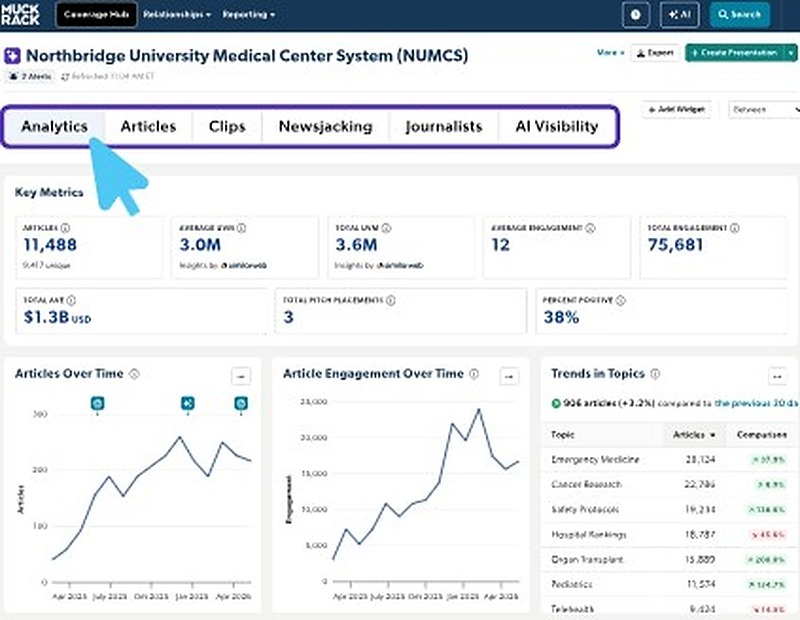
Muck Rack is a PR platform built to cover the full media relations cycle: finding journalists and content creators, monitoring where your brand gets mentioned, personalizing pitches, managing follow-ups, and reporting on campaign results. It markets itself as one cohesive system rather than a single-purpose tool, and it serves brands, agencies, journalists, and media professionals.
The media database spans digital, broadcast, print, podcasts, newsletters, and social media, so users can search for both outlets and individual journalists in one place. Muck Rack layers AI-powered journalist recommendations on top of that search function, along with pitching tools that integrate with email and a feature called PressPal.ai.
Once a list is built, users can set up alerts, build coverage reports, generate dashboards, create interactive presentations, and even connect results to Google Analytics. Businesses that need more than the core package can add print monitoring, broadcast monitoring, social listening, press release distribution, API access, and media intelligence services.
Muck Rack combines journalist search, pitching, media monitoring, and coverage reporting in one PR platform.
Muck Rack Pricing Plans
Muck Rack offers three plans, Starter, Standard, and Premier, with separate packages for brands and agencies.
Starter: Journalist search, media lists, pitching through PressPal.ai, alerts via email and Slack, a template dashboard, and self-led onboarding.
Standard: Everything in Starter, plus AI-powered journalist recommendations, podcast monitoring, unlimited media list exports, instructor-led onboarding, and a dedicated customer success contact.
Premier: Everything in Standard, plus custom dashboards, advanced reporting, and deeper AI insights and workflow tools.
Prices aren’t listed, since each quote depends on factors like team size. Muck Rack’s own guide puts annual costs between $5,000 and $53,000, with most teams paying about $15,000 per year.
Muck Rack Pros & Cons
Pros
Monitors online articles and pushes alerts and digests through email and Slack.
Provides a range of onboarding and support levels, from self-led with pooled support on Starter to instructor-led with named support on Premier.
Includes AI-powered journalist recommendations and AI-assisted pitching through PressPal.ai.
Cons
Pricing is never published, so buyers must request a customized proposal before knowing what the platform will cost.
Starter plan exports are limited, which can slow down teams that need to move lists between systems.
Custom dashboards are a Premier-only feature, not available on Starter or Standard.
The platform centers on journalist outreach, coverage monitoring, and PR measurement, not on producing or distributing multi-format content across social, video, podcast, and news platforms.
Muck Rack Reviews
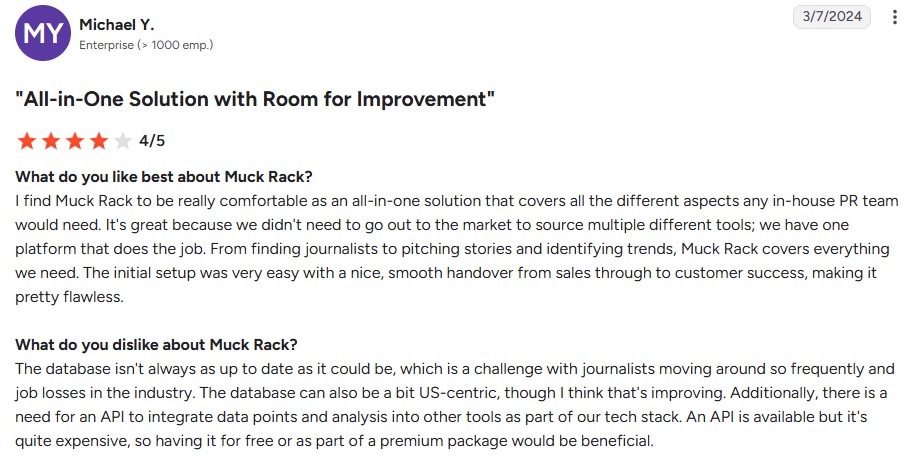
Muck Rack holds a 4.5 out of 5 rating on G2.
Muck Rack works well as an all-in-one platform for in-house PR teams, covering journalist discovery, pitching, and trend monitoring without the need for separate tools. Setup is easy, with a smooth handover from sales to customer success.
On the downside, the journalist database isn’t always up to date since reporters change jobs often, and coverage leans toward US media. The API, which connects Muck Rack data to other software, is also seen as costly, and some users would prefer it included in a premium package.
In-house PR teams use Muck Rack to find journalists, pitch stories, and spot trends from a single platform.
What Is Propel AI?
Propel AI calls itself the first large language model built specifically for PR, and it leans heavily on that claim throughout its product. Rather than positioning itself as a database with some AI features bolted on, Propel frames the entire platform around automation: writing pitches, building media lists, and predicting which journalists are most likely to respond.
The company’s stated numbers are the headline of its pitch. Propel claims users can double journalist response rates, increase organic backlinks by a factor of ten, and save more than 20 hours per week by handing research and drafting tasks to the AI.
Propel serves in-house communications teams and agencies; its product language focuses less on “manage your PR operation” and more on “let AI do the pitching for you.” That distinction matters when deciding which platform fits your team’s working style.
Propel provides an AI agent built specifically for PR teams and agencies.
Propel Pricing Plans
Propel offers three plans: Essentials, Pro, and Premium. Prices aren’t listed on its website, so buyers need to contact Propel or book a demo for a quote. Every plan includes the same core features:
Unlimited contacts and pitches, with Gmail and Outlook integrations
AI tools for writing pitches and press releases and for building media lists
Journalist preference insights and source requests
A media contact database and a pitch pipeline board for tracking outreach
Campaign, team, and business-outcome reporting
An article research tool covering more than 500 million articles
The plans differ only in the number of users and monitoring alerts.
Propel Pros & Cons
Pros
Propel’s AI is trained on 25 million pitches, which gives it a large pool of examples for predicting which pitches get responses.
Its journalist preference insights match pitch timing to each reporter’s habits, a level of detail most PR tools don’t offer.
Cons
Monitoring alerts are capped at 50, even on the top Premium plan, which may not be enough for teams tracking a lot of ongoing coverage.
Pricing isn’t published, so buyers have to book a sales call before they can see what Propel costs.
Propel focuses on earning media coverage through journalist pitching. It doesn’t create videos, podcasts, infographics, or social posts, and it doesn’t distribute content across other platforms.
Propel Reviews
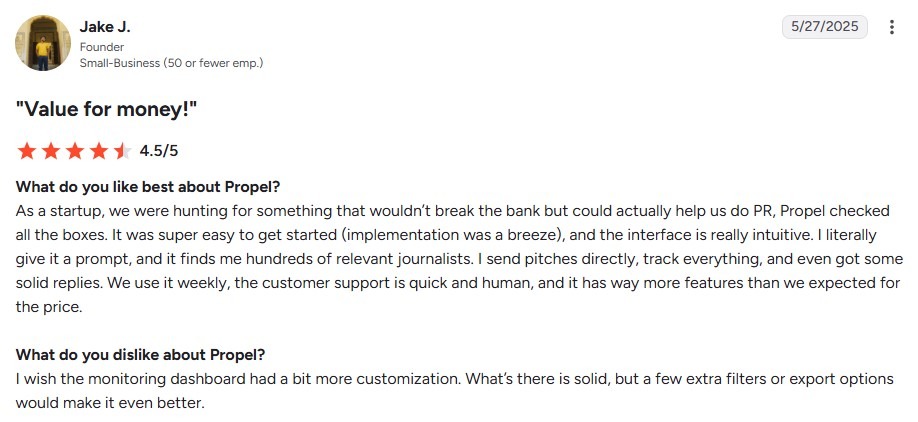
Propel holds a 4.4 out of 5 rating on G2.
Propel offers good value for small teams on a budget, with easy setup and a simple interface. A single prompt can surface hundreds of relevant journalists, and teams can pitch, track responses, and manage replies in one place. Support is fast and friendly. The main drawback is limited dashboard customization, with few filters and export options.
Small teams value Propel for its simple setup, AI journalist search, and responsive customer support.
AmpiFire & Medialyst: Two Top Alternatives
AmpiFire for Multi-Format Content Distribution
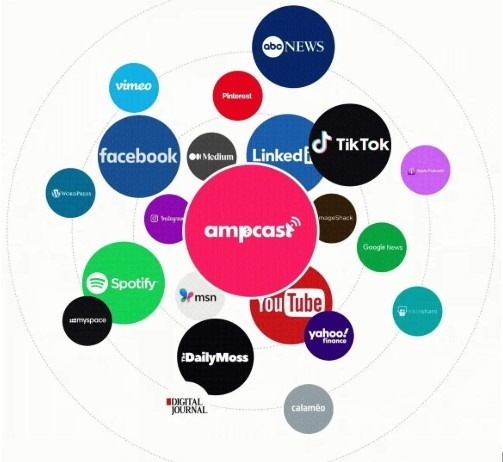
AmpiFire’s AmpCast publishes one announcement across news sites, video platforms, podcasts, and social media.
AmpiFire gives businesses a more direct way to put their news in front of buyers. Rather than pitching journalists and waiting for coverage, its AmpCast AI turns one announcement into eight formats: news articles, blog posts, long-form and short-form videos, interview-style podcasts with realistic AI voices, infographics, slideshows, and social posts.
That content is then published across more than 300 sites. AmpiFire says a full campaign can be created and distributed in about 20 minutes, which it estimates is 504 times faster than producing the same content by hand.
Many PR platforms only share prices after a sales call, but AmpiFire’s pricing is listed upfront:
DIY Content Creation With AI: $97/month
Done-For-You Optimized Multi-Format Creation: $297 per topic
Syndication & Distribution across 300+ platforms: $497 per campaign
Multichannel Traffic & Content Agency Service: from $3,599/month, depending on volume
Medialyst for Fast Journalist Targeting
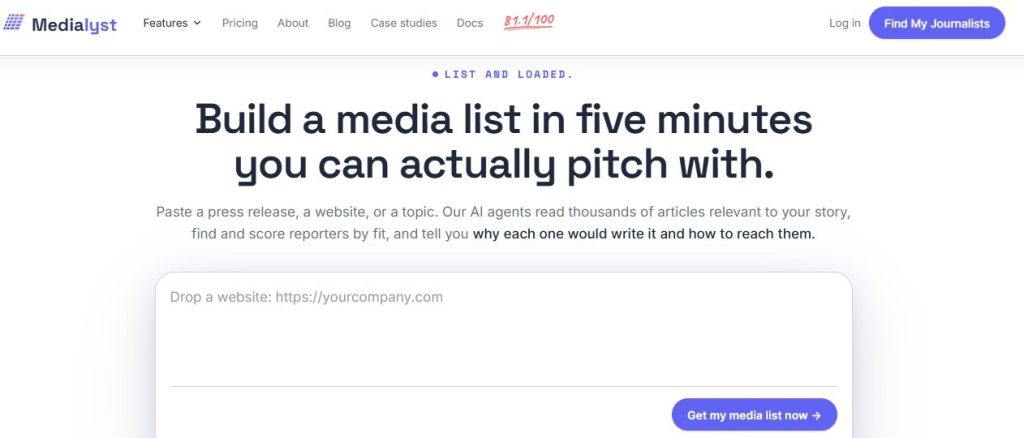
Medialyst builds targeted media lists from a press release, website, or topic.
Medialyst focuses on one task: building a targeted list of reporters for a specific story. Users enter a press release, website, topic, competitor article, or breaking headline. Medialyst’s AI agents then read related coverage, find relevant reporters, score each one’s fit from 0–100, verify contact details, and suggest pitch angles.
The company says the process takes about five minutes from story brief to pitch-ready list, compared with days of manual research. Instead of mass pitching, Medialyst returns a shorter, reviewed list of about 10–20 reporters.
Pricing is listed on its website and is based on monthly credits:
Starter: $149/month, with 1,000 credits
Pro: $299/month, with 3,000 credits
Scale: $800/month, with 10,000 credits
Muck Rack vs Propel vs Alternatives: Features & Pricing
Platform
Main Focus
Key Features
Pricing
Best For
AmpiFire
Multi-format content distribution
Turns one announcement into 8 formats and publishes them across 300+ sites
From $97/month
Businesses that want news seen on search, video, podcast, and social platforms
Muck Rack
All-in-one PR platform
Journalist search, PressPal.ai pitching, monitoring, and coverage reports
Custom quote, about $5,000–$53,000/year
Brands and agencies managing all media relations in one place
Propel
AI-powered pitching
AI-written pitches, journalist preference insights, and a pitch pipeline
Custom quote
Teams that want faster pitching
Medialyst
Targeted reporter lists
AI-scored list of 10–20 reporters in about five minutes
From $149/month
Teams needing quick, story-specific media lists
Muck Rack & Propel Finds Journalists, AmpiFire Puts Your Story in Front of Buyers
Choosing between Muck Rack and Propel depends on what your team needs most. Muck Rack suits teams that want one platform with a broad journalist database and full reporting tools. Propel suits teams that want AI to speed up pitching and track business outcomes. Both require a sales call for pricing.
Both platforms still rely on journalists choosing to cover your story. We recommend AmpiFire AmpCast AI for businesses that want each announcement to reach buyers directly, with one topic turned into eight content formats and published across 300+ platforms, starting at $97 a month. Start sharing your next announcement with AmpiFire.
Frequently Asked Questions (FAQs)
Is Muck Rack Worth the Cost for Small PR Teams?
It depends on budget flexibility, since Muck Rack doesn’t publish pricing and requires a custom quote based on team size. Small teams get access to journalist search, media lists, and PressPal.ai pitching even on the Starter plan, but limited exports and template-only dashboards may feel restrictive as the team grows.
Does Propel AI Replace a PR CRM?
Yes, Propel functions as a PR CRM in addition to its AI pitching tools. It manages media lists, contacts, journalist correspondence, pitch status, and campaign pipelines in one dashboard, replacing the need for a separate spreadsheet-based system.
Can I Use Muck Rack and Propel Together?
Yes, since the two platforms serve different purposes. Muck Rack is an all-in-one PR platform, while Propel focuses on AI-powered pitching. Running both means paying for two custom-quoted subscriptions, so smaller teams may get better value by choosing the one that fits their biggest need.
What Is the Cheapest Alternative to Muck Rack?
Among tools with published pricing, AmpiFire’s DIY Content Creation With AI plan starts at $97 per month. Medialyst’s Starter plan costs $149 per month for 1,000 credits. Both list exact prices on their websites, while Muck Rack and Propel share pricing only through a custom quote.
How Is AmpiFire Different From a Journalist Database?
A journalist database helps you find reporters and pitch them for coverage, while AmpiFire publishes your news directly. Its AmpCast AI turns one topic into eight formats, including news articles, videos, podcasts, and infographics, then distributes them across 300+ platforms like YouTube, Spotify, and Google News.
*Note: Pricing and/or product availability mentioned in this post are subject to change. Please check the retailer’s website for current pricing and stock information before making a purchase.
Thula is a seasoned content expert who loves simplifying complex ideas into digestible content. With her experience creating easy-to-understand content across various industries like healthcare, telecommunications, and cybersecurity, she is now honing her skills in the art of crafting compelling PR. In her spare time, Thula can be found indulging in her love for art and coffee.