Media Advisory vs Press Release: Differences, Use Cases & Examples
5 min read
Key Takeaways
A media advisory and a press release both communicate news to journalists, but they serve distinct stages of the news cycle, and sending the wrong one can cost you coverage or attendance.
A media advisory is a short, scannable invitation built around the five W’s, sent 1–2 weeks before an event to secure live journalist attendance.
A press release is a complete news document with quotes and a boilerplate, distributed when the announcement is finalized and ready for publication.
Both formats depend on editorial gatekeepers; AmpiFire reaches potential customers directly without waiting for journalist pickup or wire-service approval.
AmpiFire’s AmpCast AI transforms a single topic into 8 content formats and distributes them across 300+ high-authority platforms, including Fox affiliates, Spotify, and YouTube, for ongoing multi-channel organic traffic.
Understanding the Difference Between a Media Advisory & a Press Release
The core difference between a media advisory and a press release is timing and intent: a media advisory invites journalists to attend an upcoming event, while a press release distributes a finished news story ready for publication. Using the wrong one at the wrong moment is one of the most common reasons announcements fail to land coverage.
The sections below break down each format in detail, with examples and use cases, and show how AmpiFire offers a third path for businesses that want to reach customers directly rather than route every announcement through journalists.
Stop Limiting Yourself to Just PR or SEO Multi-Channel Content Marketing Gets Real Results
• The Problem: Traditional PR and SEO only reach audiences through single channels. Your customers are scattered across search, social media, video platforms, and podcasts. • The Solution: AmpiFire’s AmpCast transforms one topic into 8 different formats (news articles, blog posts, videos, video shorts, interview podcasts, infographics, slideshows, social posts) and distributes across 300+ high-authority sites including Fox affiliates, Spotify, and YouTube.
What You’ll Discover on PressCable: ✓ Why multi-channel content outperforms traditional PR and SEO ✓ Real case studies of businesses dominating multiple platforms ✓ Step-by-step guides for multi-format content creation ✓ Cost-effective alternative to expensive agencies
A media advisory is a short, one-page document sent to journalists, reporters, and editors before an event to notify them of the event and invite them to cover it. Unlike a news story, it provides no background, company history, or extended context. Its only job is to provide media contacts with enough information to decide on attendance or to assign a reporter to the event, based on their editorial priorities and audience relevance.
The format follows a structure built around five key questions:
Who is hosting the event?
What does the event involve?
When will the event take place?
Where will it take place?
Why would it be relevant to the journalist’s audience?
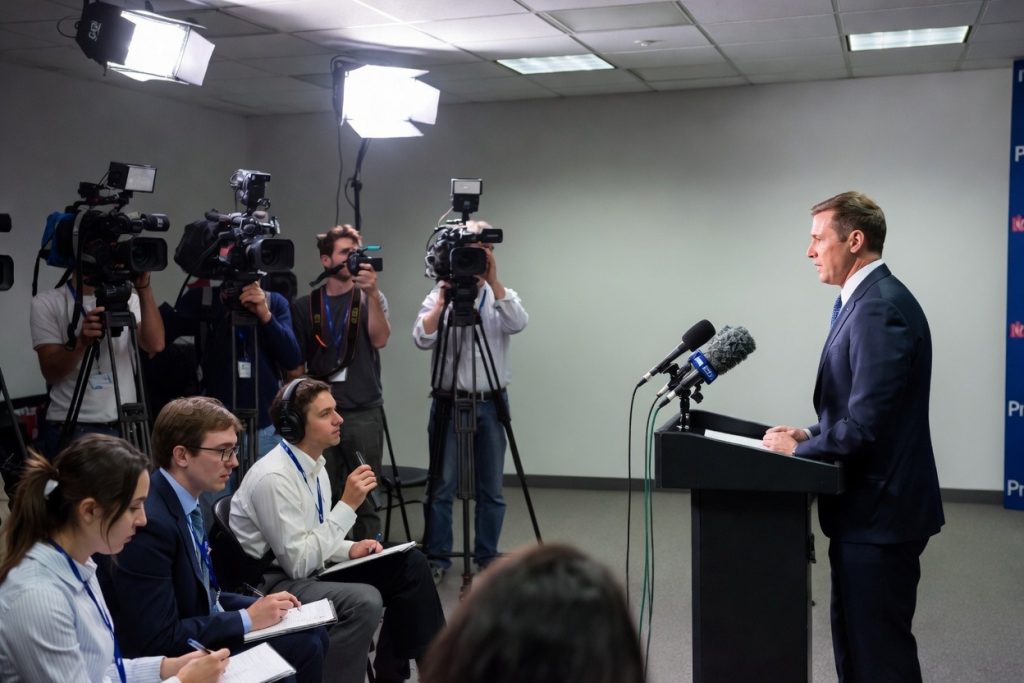
A media advisory invites journalists to attend and cover an event in person, such as a press conference or product launch.
What Is a Press Release?
A press release is a structured news announcement written in journalistic style and distributed to media outlets, PR wire services, and news platforms. The standard format includes a headline, a dateline, an opening paragraph that covers the most important facts first, supporting paragraphs with background details and direct quotes from company representatives, and a short company description at the end, known as a boilerplate. The boilerplate remains consistent across every release a company issues, giving journalists a quick reference for background information without additional research.
The release can be sent directly to specific journalists or distributed through wire services that syndicate content to hundreds of news websites and aggregators at once.
A press release is a complete news document written in journalistic style, including a headline, dateline, key facts, quotes, and a company boilerplate.
When to Use a Media Advisory vs a Press Release
When to Send a Media Advisory
Media advisories work best when live media presence adds real value: press conferences, product launch events, store grand openings, charitable fundraisers, and public demonstrations all fit this format.
Send the advisory 1–2 weeks before the event, and follow up with a brief reminder the day before to keep the event visible on journalists’ calendars. At the event itself, provide a press release or press kit so journalists have all the details they need to file a complete story without additional research.
When to Send a Press Release
A press release is the right choice when the news is complete and ready to publish. Product launches, funding announcements, executive hires, and company milestones all fit the press release format.
The announcement should stand on its own without requiring the reader to attend to anything or wait for more context. Journalists can use it to write their own story, or news aggregators may publish it directly, which contributes to longer-term traffic through search.
Send an advisory before an event to invite journalists, and save the press release for news that is complete and ready to publish.
Media Advisory vs Press Release: Examples
Media Advisory Example
MEDIA ADVISORY
WHO: GreenWave Technologies
WHAT: Product unveiling of the EcoCharge home EV charger, with live demonstrations and on-site executive interviews available to attending media
WHY: GreenWave will showcase the fastest sub-$500 home EV charger on the market. Media representatives are welcome to attend, photograph, and conduct on-site interviews.
The advisory is functional and focused. There is no company history or product background, only what a journalist needs to make an attendance decision.
Press Release Example
FOR IMMEDIATE RELEASE
GreenWave Technologies Launches EcoCharge, the Fastest Home EV Charger Under $500
Austin, TX, June 20, 2024. GreenWave Technologies today announced the launch of EcoCharge, a home electric vehicle charger that delivers a full charge in under four hours at a retail price of $499. The device is available now through the company’s website and major retail locations.
“EcoCharge puts fast, affordable EV charging within reach for everyday drivers,” said CEO Mark Hughes. “We built this for the family that needs their car ready by morning.”
The charger delivers 48-amp output, is compatible with all major EV models, and includes a companion app for charge scheduling and energy monitoring.
The press release stands on its own as a complete news document, giving journalists everything they need to write or publish a story without attending any event.
Media Advisory vs Press Release vs AmpiFire: The Key Difference
Feature
AmpiFire
Press Release
Media Advisory
Primary Purpose
Multi-channel content distribution for ongoing organic traffic
Announce completed news to media and the public
Invite journalists to attend and cover an upcoming event
Distribution
300+ high-authority platforms
PR wire services and direct journalist outreach
Direct outreach to a targeted journalist contact list
Audience Reached
Potential customers through search, social media, video, and podcasts
Journalists, editors, and news aggregators
Journalists and editors only
Timing
Ongoing content strategy
At the time of the news
One to two weeks before the event
Best For
Businesses wanting consistent organic traffic from multiple channels
Major news announcements ready for distribution
Events requiring live journalist attendance
How AmpiFire Takes a Different Approach to PR
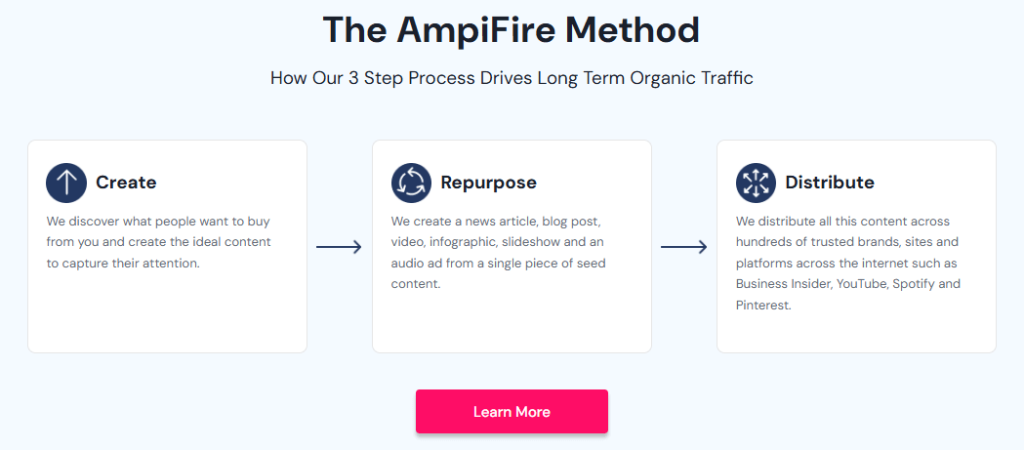
The AmpiFire method turns a single topic into multiple content formats and distributes them across hundreds of trusted platforms.
Both a media advisory and a press release have their place in media relations, and the choice between them comes down to one question: Is the story complete, or do you need journalists at the scene when it unfolds? Using the right format at the right moment gives your announcement the best chance of earning actual coverage from the outlets you are targeting. The limitation of both formats is that they route everything through journalists first.
For businesses that want their message to reach potential customers directly across search, social media, and video, AmpiFire’s AmpCast AI transforms your release into news articles, blogs, slideshows, infographics, short form videos, long form videos, podcasts, and social posts, and distribute content to 300+ sites, without waiting for editorial approval or journalist follow-through. The approach used by AmpiFire provides a broader path to direct audience reach. Ready to move beyond the press release? Learn the AmpiFire method.
Frequently Asked Questions (FAQs)
What is the main difference between a media advisory and a press release?
A media advisory is a short pre-event document inviting journalists to cover an upcoming event. A press release is a full news announcement distributed when the story is ready for publication.
Can you send both a media advisory and a press release for the same event?
Many businesses do. A media advisory goes out before the event to invite journalists. A press release follows on the event day or shortly after, giving outlets that could not attend the complete story they need to file coverage.
How long should a media advisory be?
A media advisory should stay under one page, typically 150–300 words. It is built to be scanned quickly by a journalist with limited time, so brevity matters more than depth. Cover the five W’s clearly, include your media contact details, and stop there without adding extra background.
Are press releases still effective for getting media coverage?
Press releases can still be picked up occasionally, but results are inconsistent. Many releases sent through wire services land on aggregator sites without real editorial review. Genuine coverage usually requires a strong news angle, a direct relationship with the reporter, and timing that fits their current coverage focus and audience interests.
How does AmpiFire differ from using a traditional press release service?
A press release goes to journalists and depends on them to pick it up. At AmpiFire, we create 8 content formats from a single topic and distribute them across 300+ platforms, including Fox affiliates, YouTube, and Spotify. Your content reaches potential customers directly through search, social media, video, and podcasts.
Thula is a seasoned content expert who loves simplifying complex ideas into digestible content. With her experience creating easy-to-understand content across various industries like healthcare, telecommunications, and cybersecurity, she is now honing her skills in the art of crafting compelling PR. In her spare time, Thula can be found indulging in her love for art and coffee.