Press Release vs News Release: Differences, Use Cases & Examples
5 min read
Key Takeaways
Press releases and news releases describe nearly the same document, both announcing something newsworthy in the standard format of headline, dateline, quote, and boilerplate.
They differ mainly in timing, audience, and tone: a press release is forward-looking and persuasive for journalists, while a news release reports facts neutrally for a broader public.
Distribution costs vary widely, from about $30 for a self-serve listing to more than $8,000 for a national newswire push, so reach matters more than the label you pick.
Whichever format you choose, both reach one audience through one channel, and most releases fade within days unless extended across the places customers actually spend time.
AmpiFire’s AmpCast AI turns one topic into 8 content formats and distributes them across 300+ trusted platforms, including Fox affiliates, Spotify, and YouTube, so your announcement reaches buyers across search, social, video, and podcasts.
Press Release vs News Release: What’s the Difference?
A press release and a news release are nearly the same document, differing only in timing, audience, and tone. A press release looks forward and addresses journalists in a persuasive voice, while a news release reports current or completed events to a broader public in a neutral tone.
Each format has a natural fit. Press releases suit launches, events, and rebrands. News releases suit completed deals, financial results, and community updates. The sections below break down the differences with examples and use cases, and show how AmpiFire helps a single announcement reach far past one newsroom inbox.
Stop Limiting Yourself to Just PR or SEO Multi-Channel Content Marketing Gets Real Results
• The Problem: Traditional PR and SEO only reach audiences through single channels. Your customers are scattered across search, social media, video platforms, and podcasts. • The Solution: AmpiFire’s AmpCast transforms one topic into 8 different formats (news articles, blog posts, videos, video shorts, interview podcasts, infographics, slideshows, social posts) and distributes across 300+ high-authority sites including Fox affiliates, Spotify, and YouTube.
What You’ll Discover on PressCable: ✓ Why multi-channel content outperforms traditional PR and SEO ✓ Real case studies of businesses dominating multiple platforms ✓ Step-by-step guides for multi-format content creation ✓ Cost-effective alternative to expensive agencies
A press release is an official written statement issued by a company or organization to announce something newsworthy, such as a product launch, partnership, leadership change, or event. Traditionally written for journalists and editors, it follows a recognizable structure: a headline, a dateline, an inverted-pyramid opening that answers the 5 W’s, supporting quotes, and boilerplate with contact details.
The term itself comes from the print era, when “the press” meant newspapers. Press releases often look forward, teasing something about to happen, and frequently carry a call to action that nudges readers toward a website, an event, or a purchase.
What Is a News Release?
A news release shares the same DNA with a slightly different emphasis. The label grew more common as media expanded beyond print into radio, television, and digital, so “news” came to feel broader than “press.”
A news release typically covers events that are currently happening or have already happened, and is written in an objective, journalistic tone for a wide audience rather than for journalists alone. Because the aim is to inform rather than persuade, news releases often skip the hard sell and close with a summary of the event rather than a specific call to action.
Press Release vs News Release: Differences
Press releases and news releases differ in timing, audience, and intent, though the terms are often used interchangeably by organizations.
The two terms are used interchangeably far more often than not, and many organizations simply settle on an umbrella term like “media release.” Still, a few distinctions hold up in practice:
Timing: A news release generally covers something already underway or completed, while a press release more often announces something still to come.
Audience: Press releases primarily target journalists and media outlets, whereas news releases may also speak to the general public, stakeholders, and investors.
Intent: News releases inform with a neutral tone, while press releases are persuasive and typically end with a clear next step.
These lines blur constantly, and search behavior reflects it: “press release” is searched far more often than “news release,” which is why most businesses default to it. The practical takeaway is to pick the label that fits your message, then put your energy into distribution.
Use Cases: When to Use Each
When to Use a Press Release
Reach for a press release when your announcement is forward-looking, and you want media pickup. Upcoming product launches, funding rounds, scheduled events, rebrands, and new hires all suit the format. The persuasive tone and built-in call to action help guide both journalists and the readers they pass the story on to.
Cost is a real consideration here: a press release can run from about $30 for a basic self-serve listing to more than $8,000 for a national push with every add-on, and professional writing alone often falls between $150 and $1,000.
When to Use a News Release
A news release is appropriate when you are reporting a factual development to a broad audience. Completed acquisitions, quarterly results, community milestones, regulatory updates, and real-time statements during a developing situation are natural candidates. The neutral, informational tone signals to readers that you are sharing facts rather than selling, which can build credibility with investors and the public.
Press Release vs News Release: Examples
A press release announces upcoming events with a call to action, while a news release reports completed events neutrally.
A press release example might read: “Acme Robotics Will Unveil Its First Home Assistant Robot at CES 2026.” The headline is future-facing, the body targets technology reporters with product specifics and an executive quote, and it closes with a call to action inviting readers to register for a live demo.
A news release example might read: “Acme Robotics Completes Acquisition of SensorWorks.” It reports a finished event in a neutral tone, provides the facts a general audience needs, and wraps up with a factual summary and company background rather than a sales pitch. Same company, same week, two formats serving two different purposes.
Press Release vs News Release: Comparison Table
Factor
Press Release
News Release
Primary timing
Announces upcoming events
Reports current or completed events
Main audience
Journalists and editors
Broad public, stakeholders, investors
Tone
Persuasive, promotional
Objective, factual
Call to action
Usually included
Often omitted
Best-fit use
Product launches, events, rebrands
Results, completed deals, updates
How AmpiFire Goes Beyond Press Release & News Release
PressCable’s free library and AmpiFire’s content amplification give a single announcement staying power across the channels customers already use.
Many businesses spend more time deciding what to call an announcement than figuring out how to make it land. A well-written release still reaches one type of audience through one channel, and most fade within days simply because the customers it needs to reach are not gathered in any single newsroom inbox.
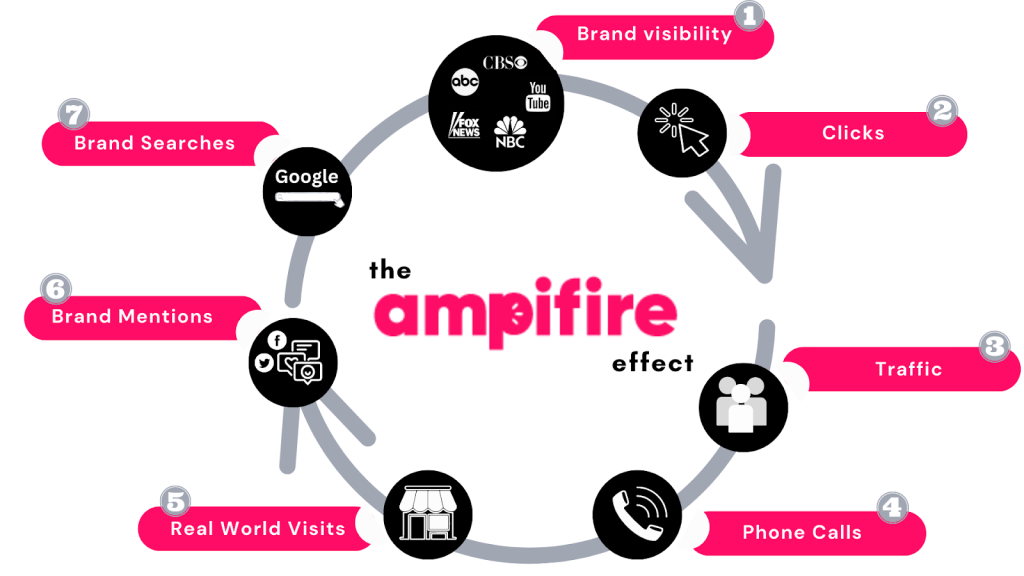
That is the problem AmpiFire was built for. Our AmpCast AI turns one topic into 8 content formats, news articles, blog posts, interview podcasts, longer informational videos, reels and shorts, infographics, flipbooks and slideshows, and social posts, and publishes them across 300+ trusted sites, including Fox affiliates, Spotify, and YouTube. The result is an announcement that keeps working across search, social, video, and podcasts long after a single newsroom send would have faded. Ready to give your next release that kind of reach? See how the AmpiFire method works.
Frequently Asked Questions (FAQs)
Is a press release the same as a news release?
Largely, yes. Most professionals use the terms interchangeably, and some adopt “media release” as a catch-all. The minor differences come down to timing, audience, and tone. A press release leans promotional and forward-looking, while a news release reports facts neutrally for a wider audience that consumes news across many channels.
Which term should I use?
For most businesses, “press release” is the safer default because it is searched far more often and is widely understood by journalists and distribution platforms. Choose “news release” when your announcement is purely informational, reports something already completed, and is aimed at the general public rather than the media specifically.
Does a news release need a call to action?
Not usually. News releases are designed to inform rather than persuade, so they typically close with a factual summary rather than a direct call to action. Press releases more often include one, pointing readers to a website, event, or product page, because they carry a promotional purpose alongside the news.
How much does it cost to distribute a release?
It varies widely. Self-serve listings can start near $30, while national or premium newswire distribution can exceed $8,000 per release, and professional writing alone often runs $150 to $1,000. Costs climb with word count, multimedia, and targeting, so reach and value matter far more than the sticker price.
Does AmpiFire replace a traditional press release or work alongside it?
It can do either, though using AmpiFire on its own is usually the stronger choice. A traditional press release depends on a journalist picking it up, while AmpiFire puts your announcement in front of customers directly across the channels they already use, without waiting on editorial approval. Some businesses still pair the two for the added journalist audience, but for most, AmpiFire alone delivers more consistent reach than a newswire send.
*Note: Pricing and/or product availability mentioned in this post are subject to change. Please check the retailer’s website for current pricing and stock information before making a purchase.
Thula is a seasoned content expert who loves simplifying complex ideas into digestible content. With her experience creating easy-to-understand content across various industries like healthcare, telecommunications, and cybersecurity, she is now honing her skills in the art of crafting compelling PR. In her spare time, Thula can be found indulging in her love for art and coffee.